
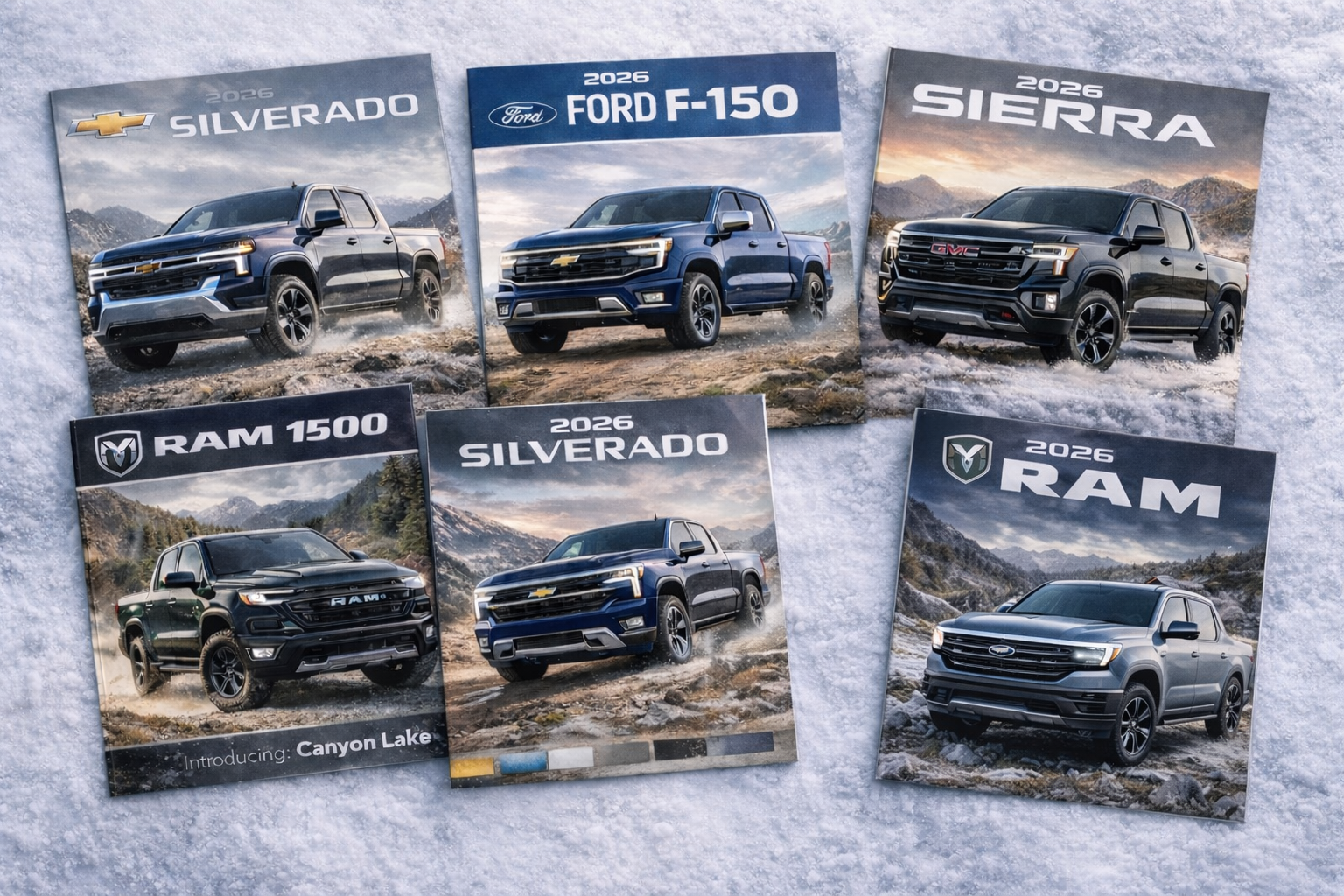
Brochures love winter. They talk about “intelligent” 4×4 systems, Snow modes, torque, ground clearance—then send you on your way as if everything is handled. These are exactly the points salespeople like to highlight when you’re shopping for a pickup.
But in Québec, winter isn’t a backdrop—it’s a reality check. Temperatures drop fast. Road salt sticks to everything. Black ice shows up on Highway 132 without warning. Snowbanks turn your driveway into an obstacle course. And if you’re towing a snowmobile trailer, you quickly learn that towing changes everything.
In this article, I’ll walk you through the things brochures rarely mention. These are the details that separate a pickup that “gets the job done” from one that wastes your time, your money, and your patience.
Cold weather doesn’t “slightly reduce” tire pressure — it drains it
In winter, tire pressure drops as temperatures fall. That means you can leave home with tires that seem fine… and end up underinflated without realizing it. Tire pressure should always be checked cold, outdoors—not inside a heated garage.
Why this matters even more with a pickup
- Payload in the bed (snowmobile, ATV, motorcycle, fuel cans)
- Constant weight changes on the rear axle
- Towing (snowmobile trailer, ATV trailer, equipment)

Regular tire pressure checks are critical for winter driving
Slightly underinflated tires mean more float on soft snow, vague steering feel, and longer braking distances.
4×4 doesn’t mean four-wheel braking
Four-wheel drive helps you get moving and maintain momentum—but it does nothing to shorten braking distances on ice. This is a classic winter trap: the truck feels planted, so confidence builds… until it’s time to slow down or stop.
The typical scenario: entering a snowy corner a bit too fast or braking late because “it feels like it grips.” That’s when reality hits—traction always has limits, regardless of the badge on the grille.

Towing a snowmobile in winter: control is the real challenge
Winter towing isn’t just about hooking up and driving away. Everything becomes more demanding:
- Longer acceleration times
- Earlier, smoother braking
- Slower cornering
- Greater following distances

If your pickup has a short bed—or if you’re carrying a snowmobile directly in the box—the weight distribution changes, and so does braking behaviour. A truck can be extremely capable, but proper loading and secure tie-downs do half the work.
Road salt: the quiet enemy that wins over time
In Québec, road salt is part of winter life. It improves safety—but it also attacks your truck. Salt builds up in frame crevices, suspension components, brake lines, and electrical connectors.
What brochures don’t mention: long-term winter reliability depends heavily on maintenance. Frequent washes—especially underbody washes—and rust protection should be habits, not afterthoughts. Otherwise, corrosion settles in slowly… and gets expensive.
Cold starts: batteries and fuel don’t forgive
When temperatures plunge, weaknesses show up fast: tired batteries, sluggish starters, inconsistent fuel delivery. A nearly empty fuel tank encourages condensation, which can freeze and cause starting issues.
The rule is simple: prepare your truck before the cold snap, not after. A healthy battery, winter-rated fluids, and basic preventive checks can save you a lot of frustrating mornings.
Regulations and timing: winter won’t wait for your garage appointment
In Québec, winter tires are mandatory during the legal period. But for pickups, this goes beyond compliance. Weight, torque, and variable loads mean a true winter tire completely transforms how a truck behaves once temperatures drop.
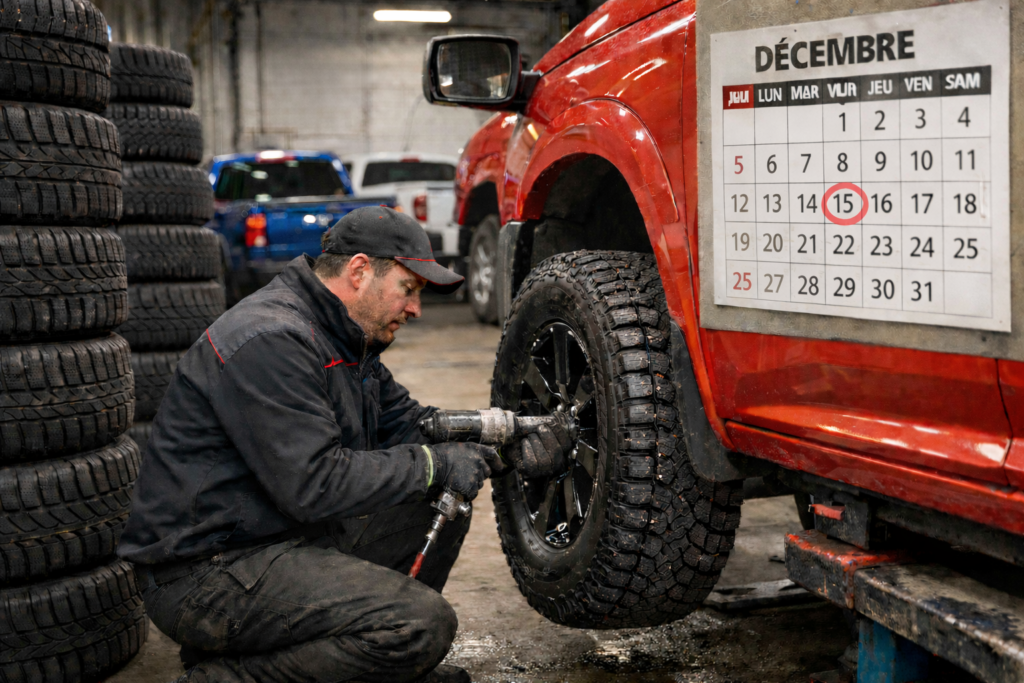
Waiting for the first storm to install winter tires is usually waiting too long.
YourPickup.ca winter checklist before heading out with a snowmobile
Before wrapping up, here’s a quick checklist that can save you a lot of trouble:
- Tire pressure checked cold and adjusted for load
- Winter washer fluid, ice scraper, and snow brush on board
- Bed organized and cargo properly secured
- Trailer inspected: tires, lights, couplers
- Regular wash plan, including underbody
- Fuel tank kept sufficiently full before long outdoor parking

Conclusion
The perfect pickup doesn’t exist. But a pickup properly prepared for Québec winter conditions absolutely does. Brochures sell power and ground clearance; reality demands correct tire pressure, humble driving, controlled towing, and a strategy against salt. More often than not, that’s the difference between a smooth trip to your favourite backcountry spot—and a day spent managing problems instead of enjoying the ride.
