
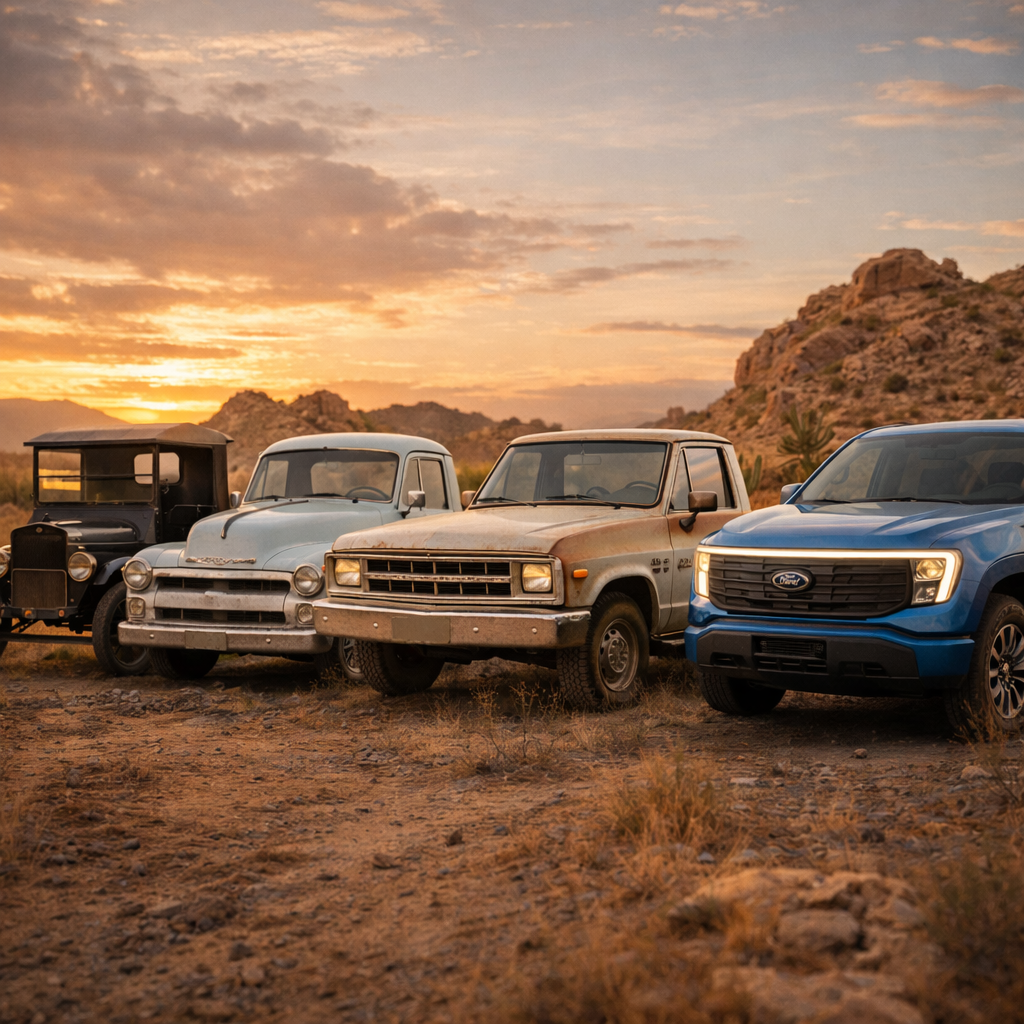
From early work trucks to everyday vehicles, across all brands
When people talk about pickups in North America, the first image that comes to mind is often tied to the big American manufacturers. Ford, Chevrolet, and Dodge (now Ram) absolutely shaped a huge part of this segment’s history. But reducing the pickup story to those names alone misses something important: the impact of international manufacturers, who deeply influenced reliability, durability, truck sizing—and even how owners use their pickups day to day. Pickup truck history is really a constant dialogue between American tradition and ideas imported from elsewhere, always guided by real-world use.The early days: when a pickup is simply a motorized tool
The first pickups appeared in the early 20th century, long before “pickup” was its own category. They were often modified cars fitted with a basic cargo box—frequently made of wood. The best-known example remains the Ford Model T, which became the foundation for countless utilitarian conversions. At that time, pickups had no personal-use mission. They were built to move goods, farm supplies, and tools. Comfort didn’t exist, safety was minimal, and design wasn’t even a consideration. What mattered was the ability to work—and to be repaired easily.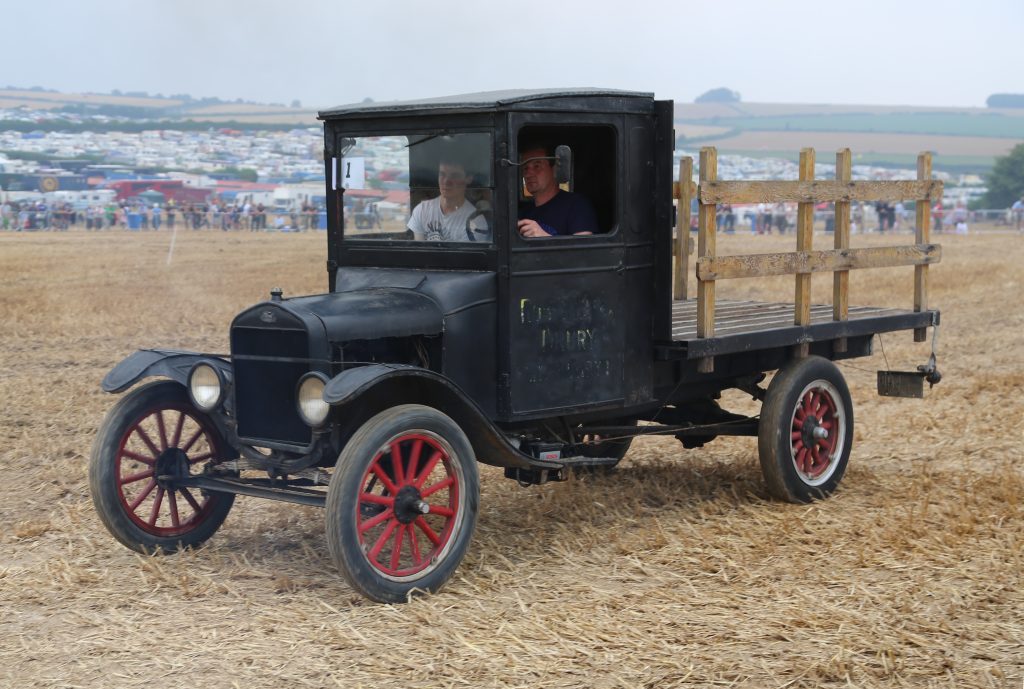
1930s to 1950s: the birth of the modern pickup
Between the 1930s and the post-war years, the pickup starts to take shape as a distinct vehicle. American manufacturers develop models designed specifically for this role, with a separate frame, an enclosed cab, and a bed that’s integrated into the overall design. Trucks like the Chevrolet 3100 represent that shift. They remain work-focused, but offer better ergonomics, a roomier cab, and improved durability. Ford, on its end, lays the groundwork for what becomes the F-Series, officially launched in the early 1950s. This is also when the pickup begins to be seen as a long-term investment—something that can serve for decades.
1950s and 1960s: pickups enter North American culture
Through the 1950s and 1960s, pickups slowly grow beyond their strictly utilitarian role. In North America, they become symbols of independence and freedom. Cabs get larger, suspensions become more forgiving, and engines grow more powerful. Even though work remains the primary mission, more owners start using their pickup as a main vehicle—especially in rural regions across Canada and the U.S. This cultural shift is key, because it sets the stage for what comes next.
The 1970s: American power, and the first wake-up calls
The 1970s are defined by the rise of full-size pickups. V8 engines dominate, towing capacity climbs, and frames get tougher. The Chevrolet C/K, Ford F-Series, and Dodge D-Series help define the segment. But this decade also brings the first major constraints: energy crises, emissions regulations, and growing concerns around fuel consumption. Pickups have to evolve without losing their purpose. And it’s in this exact context that international manufacturers begin to play a defining role.
The arrival of Japanese manufacturers: a quiet revolution
Starting in the 1970s—and especially in the 1980s—Japanese brands like Toyota and Mazda enter the North American market with a very different philosophy. The Toyota Hilux, sold here under different names depending on the year, stands out for exceptional reliability, mechanical simplicity, and ruggedness well beyond what its size suggests. Mazda, with its B-Series lineup, offers a similar alternative—often smaller, more affordable, and easier to live with day to day. These trucks don’t match the towing muscle of American full-size pickups, but they answer a need the market hadn’t really addressed: a pickup that’s practical, accessible, and built to last. In Canada, these models quickly find an audience—especially among owners who want a pickup for light work, recreation, or winter driving, without the costs tied to a bigger truck.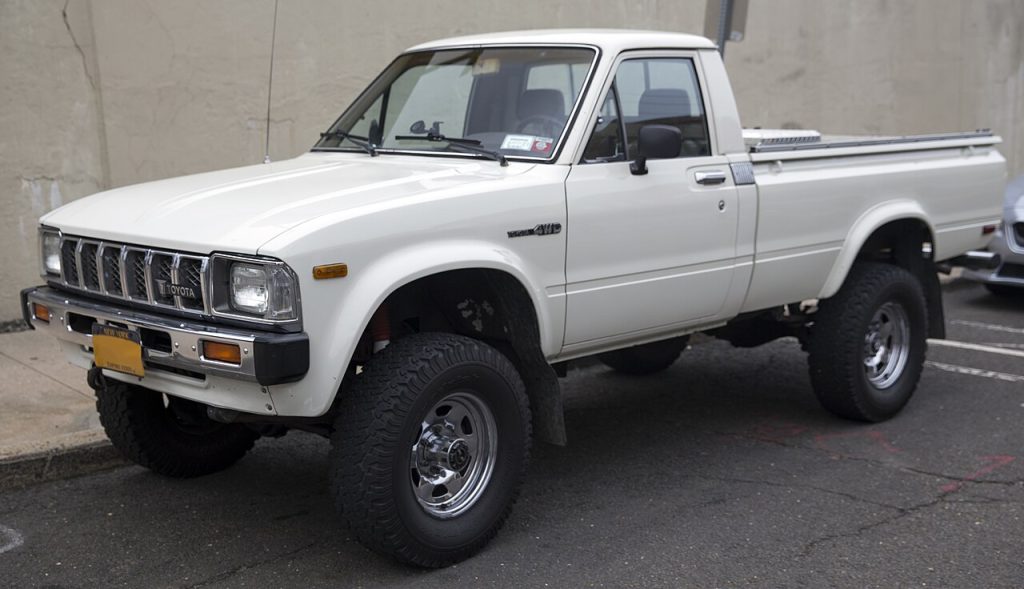
1980s and 1990s: reliability, comfort, and the pickup goes mainstream
The 1980s and 1990s mark a decisive turning point. American manufacturers improve build quality, reliability, and comfort—partly under pressure from Japanese competition. Cabs get quieter, suspensions become more balanced, and electronic fuel injection becomes widespread. This is also the era when Chrysler makes a big splash with the Dodge Ram and its bold design, giving full-size pickups a stronger identity. At the same time, compact and midsize pickups grow in popularity, setting the stage for even more versatile usage.
The 2000s: the pickup becomes a primary vehicle
By the early 2000s, the transformation is complete. Full-size pickups like the Chevrolet Silverado and Ford F-150 offer comfort levels comparable to SUVs, while keeping superior utility capability. On the international side, Toyota cements its presence with trucks like the Toyota Tacoma, which becomes a benchmark for durability and resale value. The Tacoma establishes itself as a logical choice for anyone wanting a versatile, reliable pickup that fits daily life—whether in the city or off-road.
The key technological advances that shaped the pickup
The pickup’s evolution is built on a series of major innovations—often introduced by landmark models. Electronic fuel injection improves reliability and cold-weather performance. Fully boxed frames increase rigidity and stability while towing. Modern automatic transmissions with more gears transform the driving experience. In the 2010s, breakthroughs like the aluminum body on the Ford F-150 cut weight and improve corrosion resistance. High-torque turbo engines reshape how people think about displacement. Hybridization and electrification—through trucks like the F-150 Lightning and hybrid variants—show that pickups can evolve without losing their work-first DNA. Japanese manufacturers, for their part, long focused on mechanical durability, simplicity, and consistent performance—deeply influencing what North American buyers expect from a truck.
From work truck to lifestyle vehicle
If the pickup is now so common across Canada and the U.S., it’s because it became more than a tool. It evolved into a lifestyle vehicle, adaptable to a wide range of needs. Work during the week, outdoor adventures on the weekend, commuting, road trips, seasonal towing—few vehicles offer this level of versatility. American manufacturers brought the power, capability, and image. International brands helped push reliability, efficiency, and accessibility. Together, they shaped a unique segment—one that’s deeply rooted in North American culture.Conclusion: a century of evolution driven by real-world use
The history of pickups in North America is the story of constant evolution, fueled by different—but complementary—visions. From early car-based work trucks to today’s tech-packed pickups, every step has been dictated by real user needs. Today, whether it’s American or Japanese, full-size or midsize, the pickup remains a vehicle built for the terrain, climate, and realities of North America. If it has become the everyday vehicle for so many owners, it’s because it never stopped evolving—without ever forgetting why it existed in the first place.Foire aux questions (FAQ)
Canada’s vast geography, natural resources economy, and outdoor recreation culture created ideal conditions for pickup trucks to thrive. Rural communities rely on them as work tools, while urban and suburban Canadians value their versatility for cottage trips, camping, and hauling. The Ford F-Series has been Canada’s best-selling vehicle for decades.
The transformation began in the 1980s–1990s when manufacturers added comfort features like carpeting, air conditioning, and stereo systems. By the 2000s, pickups rivaled luxury cars in interior quality. Today, trucks like the Ram 1500 Limited and Ford F-150 Platinum compete directly with premium SUVs.
Ford pioneered the pickup concept in Canada with early Model T-based utility vehicles in the 1920s. By 1948, the iconic F-Series was launched, establishing the template for the modern pickup that continues today.
Canada and the US together represent the world’s largest pickup truck markets and have driven global pickup truck development. Manufacturers now export North American-style pickups to Australia, the Middle East, and parts of Europe, adapting models for local regulations and preferences.
Pickup trucks have maintained their position as Canada’s best-selling vehicles for decades and show no sign of losing dominance. Even as electrification changes powertrains, the truck body style and utility will remain popular. The next evolution is electric pickups replacing gas/diesel trucks rather than cars replacing trucks.
