
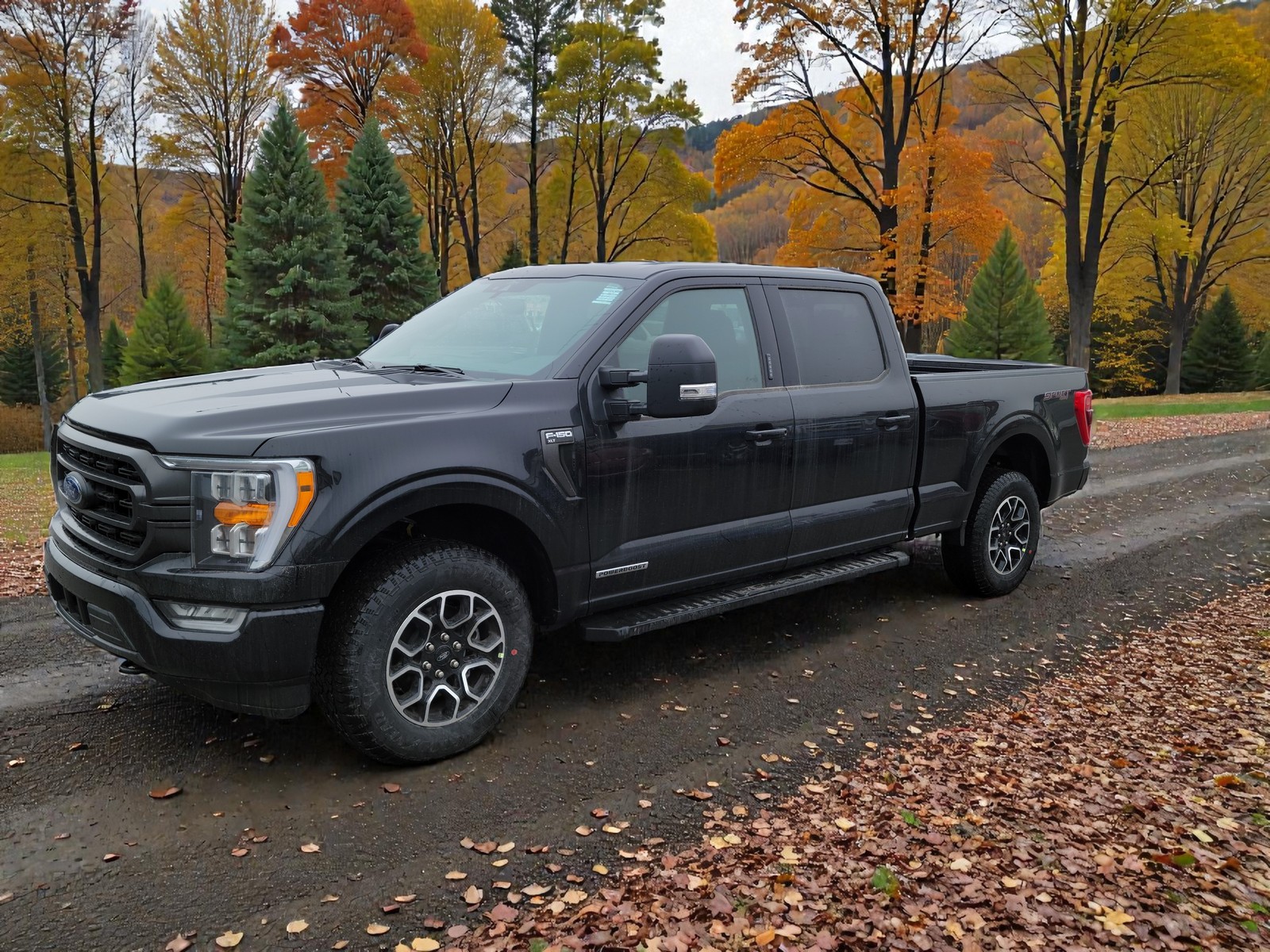
When I changed trucks three and a half years ago, I had absolutely no intention of going hybrid. I was very happy with the 5.0-litre V8—a reliable, predictable engine I knew inside out, since it had powered my last four or five F-150s. In short, it was a safe choice for me.
It was my dealer, Villeneuve Ford Matane, who planted the seed of doubt. So confident in the hybrid powertrain of the 2022 Ford F-150 PowerBoost, he flat-out told me:
“Try it. If you’re not satisfied, you come back and we’ll put you back in a V8 like before.”
That kind of pitch, coming from a salesperson, you listen to—but you keep a healthy dose of skepticism. Still, I accepted the challenge.
Three years later, I can say it without hesitation: I would not go back to a 100% gas engine.

What’s under the hood: a true hybrid powertrain
The 2022 Ford F-150 PowerBoost is not a mild hybrid. It’s a full hybrid powertrain, fully integrated into a robust mechanical setup designed to meet the demands of a full-size pickup.
Here are the key technical specs of the powertrain:
- 3.5L EcoBoost V6 gas engine paired with an integrated electric motor
- Combined output: approximately 430 horsepower
- Maximum torque: 570 lb-ft
- 10-speed automatic transmission
- Battery and generator integrated into the drivetrain
- Full hybrid system capable of driving on electric power alone at low speeds
What sets this hybrid system apart from many others is that it’s not just there to recover energy under braking or assist during launch. It can propel the truck on electric power alone, assist on grades, reduce load on the gas engine, and improve overall efficiency.

Hybrid works… as long as you adapt your driving
The first thing to understand with a hybrid pickup is that the gains aren’t magical. To fully benefit from the technology, you have to accept slight changes in driving habits.
For me, that mostly means:
- being smoother on the throttle
- better managing hard accelerations
- anticipating braking a bit more
Nothing extreme. I don’t drive like a grandparent, and I’m not slowing down traffic. On the highway, I drive at the exact same speeds as before—often around 118 km/h on cruise control. There’s no compromise there.
The difference really shows up:
- when merging onto highways
- during progressive acceleration
- in urban and suburban driving
That’s where the hybrid powertrain quietly does its work.
Towing: let’s be honest
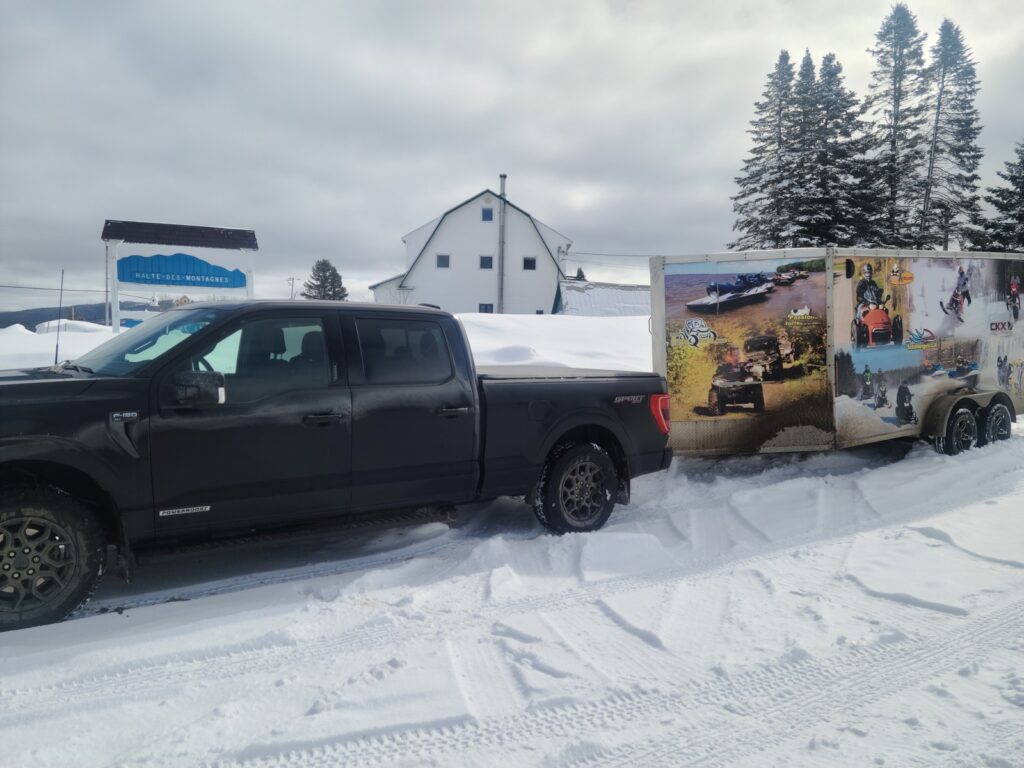
One of my biggest concerns was towing. I regularly pull 20-foot and even 28-foot trailers loaded with ATVs or snowmobiles.
Let’s be clear: if someone tows all the time—or nearly all the time—the hybrid probably isn’t the best choice, especially if fuel savings are the main goal. When towing, fuel consumption increases and can exceed what I saw with my previous 5.0L V8s.
In my case, towing represents about 10 to 15% of my driving. The rest of the time, I’m running empty.
And that’s where the hybrid really shines.
Real-world fuel economy
Without a trailer, with conservative but realistic driving, fuel consumption is clearly lower than with my previous gas-only F-150. Of course, we’re still talking about a Crew Cab pickup with a 6.5-foot bed—no one is doing 5 L/100 km in an F-150. But the improvement is real.
An important point that few people mention:
👉 the hybrid model’s fuel tank is smaller than my old V8’s (about 30 litres less).
👉 despite that, I get more driving range with the hybrid.
That’s a very concrete indicator of the system’s overall efficiency.
When towing, yes, consumption goes up. But when I look at the full picture—towing and non-towing combined—the balance remains positive.
Torque: an underestimated advantage
Where the hybrid surprised me the most is torque.
Thanks to electric assistance:
- climbs are easier
- the gas engine works less
- the transmission stays in higher gears
Both my current truck and my previous one use a 10-speed automatic transmission. With the gas engine, on a decent hill without a trailer, the truck would often drop into 6th or 7th gear. With the hybrid, in the same situation, it frequently stays in 9th or even 10th.
Result:
- lower engine speed
- less noise
- less mechanical strain
It’s a real advantage, especially on rural roads and long-distance drives.
Pro Power Onboard: the feature I never want to lose
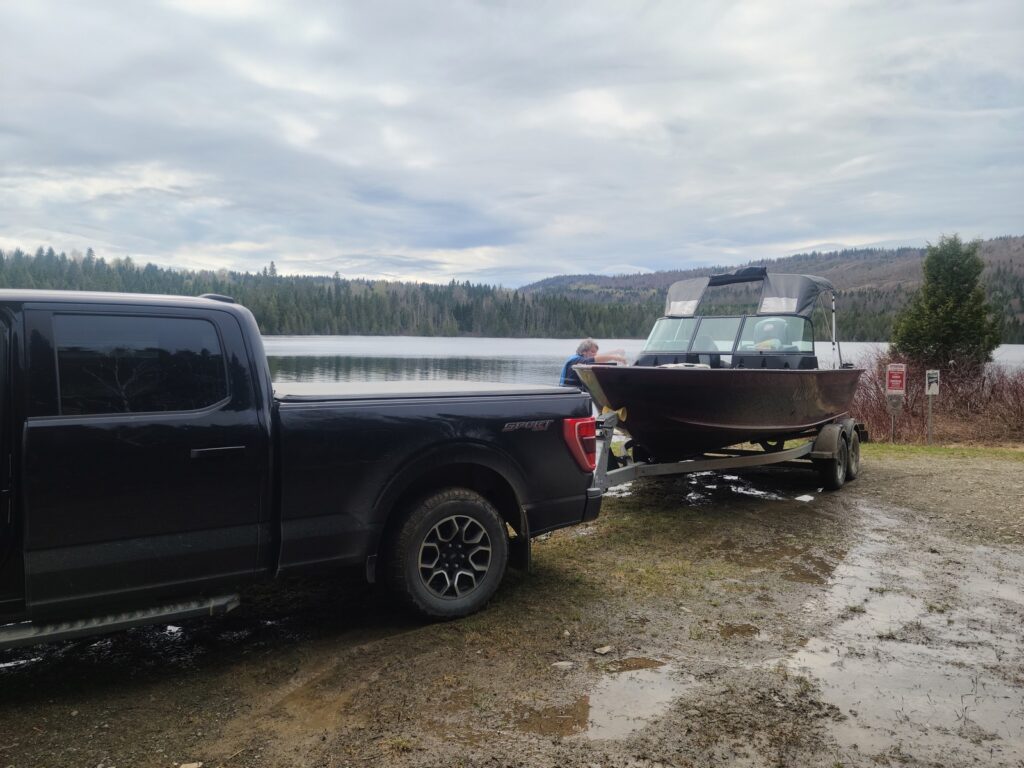
I go fishing at off-grid cabins with no electricity. Pro Power Onboard completely changes the game.
Having access to power directly from the truck—as long as there’s fuel in the tank—means:
- a built-in generator
- no extra equipment to haul
- no additional maintenance
One extension cord is all it takes to run lights, a small fan, or basic appliances at the cabin. This is a real-world advantage, not a marketing gimmick.
Hybrid yes, electric no (for my use)
I’ll be honest: the F-150 Lightning doesn’t interest me. I live in a rural area. I need range, flexibility, and predictability in winter. A 100% electric pickup doesn’t meet my current needs.
The hybrid, on the other hand, is the perfect compromise between:
- range
- efficiency
- versatility
- winter usability
TonCamion verdict
Unless my needs change drastically, I won’t go back to a 100% gas engine. I’ve become a true believer in intelligently applied hybrid powertrains for pickups.
The 2022 Ford F-150 Hybrid isn’t a truck meant to impress the neighbours. It’s a versatile, efficient tool that’s perfectly suited to real-world use—in rural areas, in winter, with or without a trailer.
👉 This isn’t an ideological choice.
👉 It’s a practical one.
I hope this article helped clarify my long-term experience with the 2022 F-150 Crew Cab PowerBoost.
