
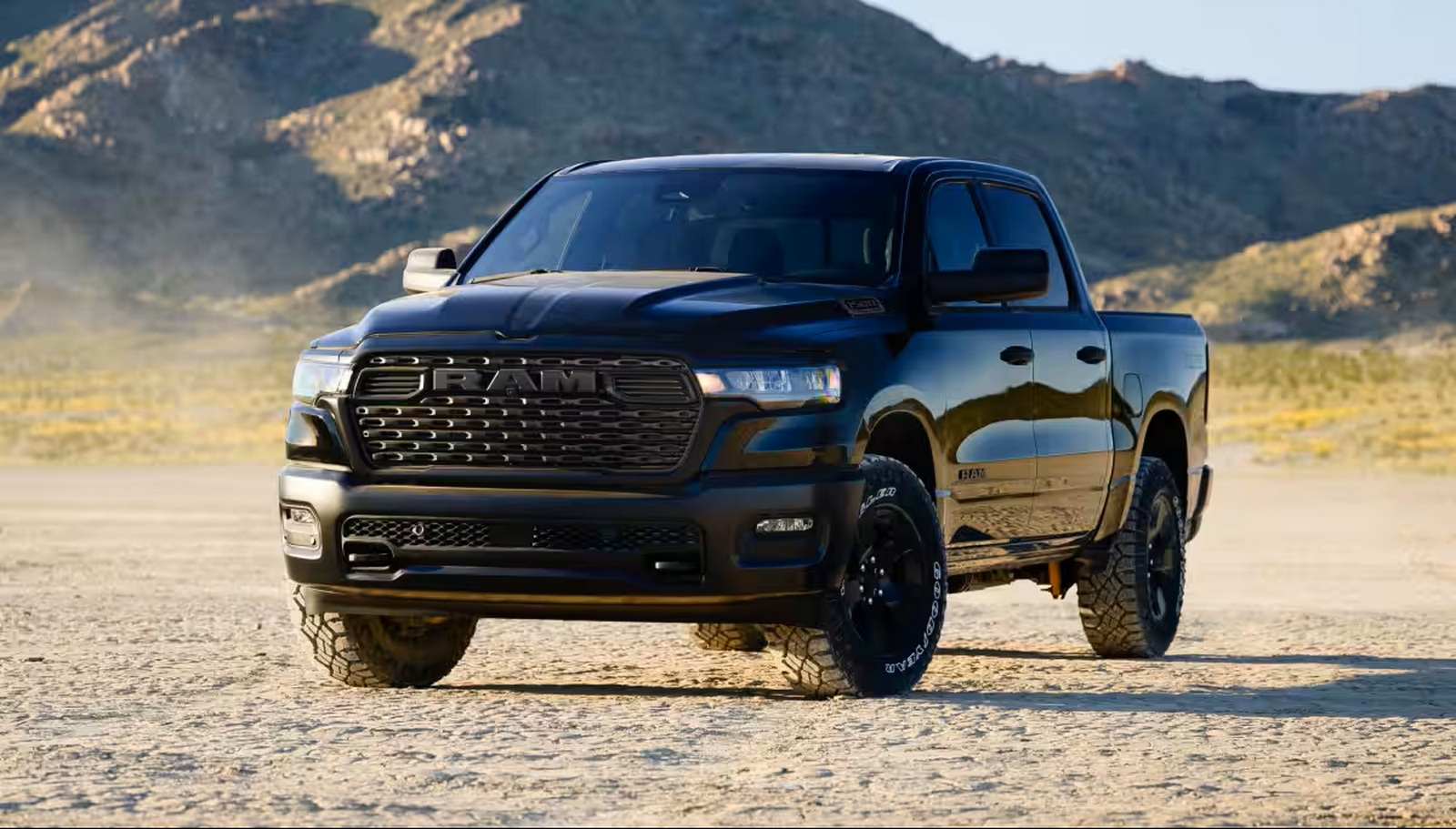
In the full-size pickup segment, every player tries to stand out. Ford focuses on all-around versatility. GM emphasizes lineup diversity. Ram, for its part, has made a clear strategic choice for several years now: placing comfort, refinement, and driving enjoyment at the core of its identity—without sacrificing the fundamental capabilities expected from a truck.
For 2026, the Ram 1500 continues firmly in that direction. No radical break, no artificial repositioning. The truck evolves through incremental improvements, building on what has already earned it a strong reputation among a well-defined clientele—often different from that of the F-150 or Silverado.
A different approach to the full-size pickup
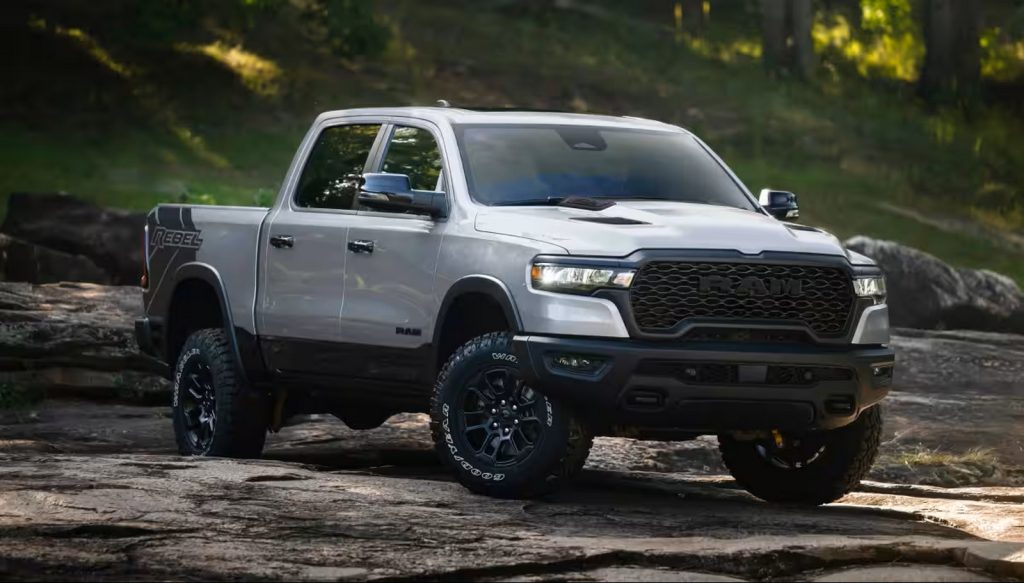
One thing needs to be clear from the start: the Ram 1500 has never tried to be the toughest pickup on the market. Its objective lies elsewhere. While some competitors prioritize a rugged, hard-working image, Ram puts the emphasis on the in-cabin experience and ride quality.
This philosophy is especially evident in the chassis design and rear suspension, which give the Ram 1500 a smoother, more stable ride—particularly when unloaded or during long highway drives. In everyday use, this difference is far from theoretical; it’s noticeable within the first few kilometres.
Powertrains: a rational but targeted lineup
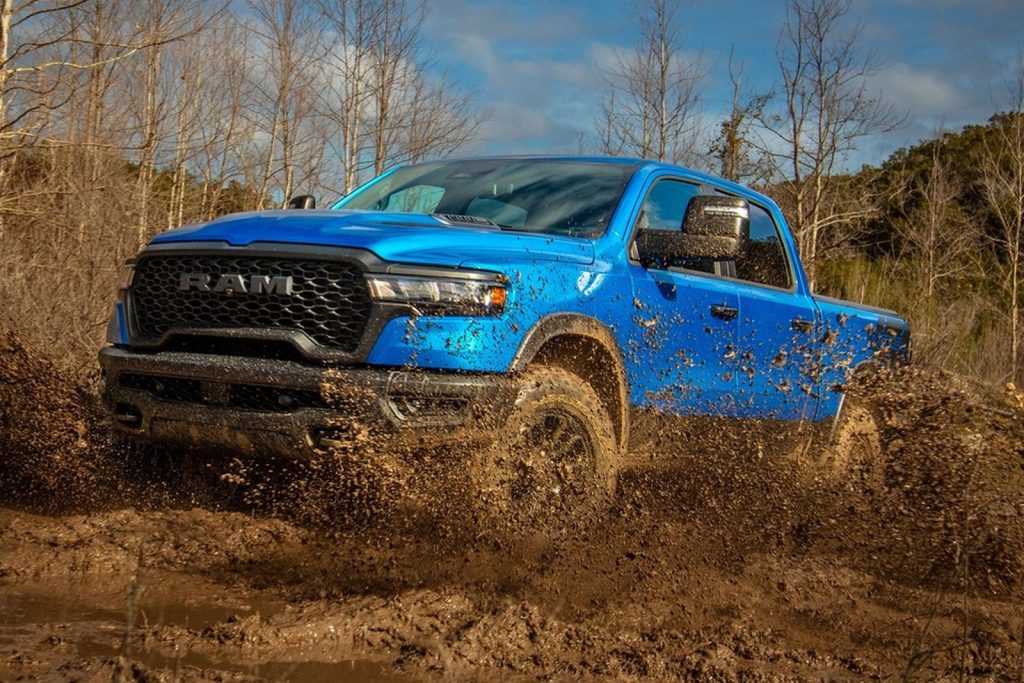
For 2026, the Ram 1500 continues to offer a powertrain lineup largely focused on gasoline engines, following a logic of progression rather than multiplying options.
The available engines are designed to meet specific user profiles:
- drivers looking for a good balance between performance and smoothness,
- users who tow occasionally,
- buyers who cover long distances on the highway.
Unlike some competitors, Ram does not try to cover every imaginable scenario. This approach has a positive effect: the lineup is clearer and easier for the average buyer to understand.
That said, this rationalization also comes with compromises. For intensive or professional towing use, some buyers will naturally gravitate toward HD models or competitors offering more specialized configurations.
Towing: sufficient for most real-world needs
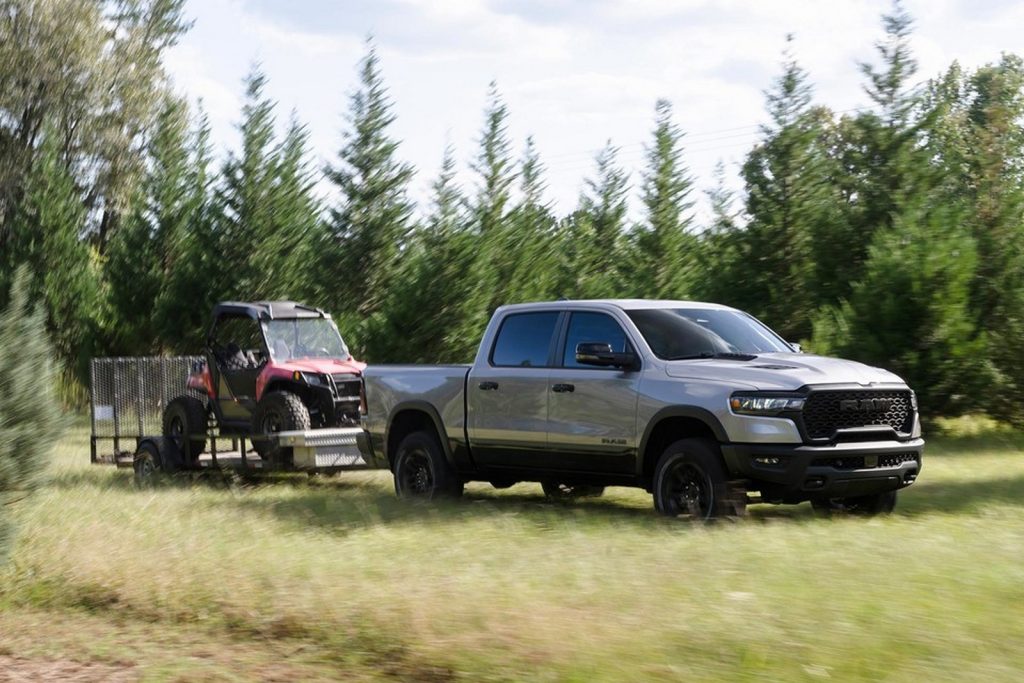
When it comes to towing capacity, the 2026 Ram 1500 remains fully competitive, but it is not aiming to break records. It primarily targets drivers who tow regularly—but not at extreme levels: travel trailers, utility trailers, and recreational equipment.

Where the Ram truly stands out is in stability and driver confidence. The suspension setup and overall chassis calibration result in a less nervous, more predictable driving experience—an undeniable advantage for less experienced towing drivers.
Once again, everything depends on configuration. A properly equipped Ram 1500 will perform its role very well. A model chosen purely for its looks can quickly reveal its limitations.
An interior that flirts with luxury… without openly claiming it
For several years now, the Ram 1500’s cabin has often been cited as one of the best in the segment—and for good reason. For 2026, that reputation remains intact.
Materials, fit and finish, sound insulation: Ram has clearly invested where drivers spend the most time. The result is an environment that feels closer to a large SUV than a traditional pickup, especially in mid-range and higher-end trims.
This positioning strongly appeals to buyers who use their pickup as a primary—sometimes even sole—vehicle. Long road trips, family travel, extended winter driving: the Ram 1500 excels in these scenarios.
A coherent lineup, but comfort-oriented
The structure of the Ram 1500 lineup is relatively straightforward:
- entry-level versions focused on value,
- mid-level trims aimed at balance,
- upper trims emphasizing comfort and technology.
What buyers must keep in mind, however, is that the Ram 1500 is rarely the most rational choice for purely intensive utility use. It is designed for those who want a capable truck that is also pleasant to live with every day.
This nuance is important—and it often makes the difference between a satisfied buyer and a disappointed one.

Winter driving: an often underestimated strength
In Canada, winter driving is a non-negotiable factor. Here, the Ram 1500 benefits greatly from its suspension setup and overall calibration. The smooth ride and stability inspire greater confidence on deteriorated road surfaces, especially when unloaded.
Of course, this does not replace proper winter tires or attentive driving, but overall, the Ram 1500 delivers a calmer, more reassuring experience than some stiffer rivals.
Ownership costs and long-term reality
The 2026 Ram 1500 is not the simplest mechanically, nor the most basic pickup in the segment. This is reflected in potential long-term ownership costs. The higher the trim level, the more demanding maintenance can become.
In return, comfort, perceived quality, and overall user experience more than compensate for buyers willing to accept that trade-off. Once again, it all comes down to priorities.
Who is the 2026 Ram 1500 really for?
The 2026 Ram 1500 is primarily aimed at buyers who want:
- a comfortable pickup for daily use,
- excellent on-road behaviour,
- a less tiring driving experience over long distances,
- a versatile truck without a strictly professional focus.
For users who tow extremely heavy loads, constantly carry maximum payloads, or seek absolute mechanical simplicity, other options may prove more logical.
YourPickup.ca Verdict
The 2026 Ram 1500 does not try to dominate through numbers. It aims to win buyers over through experience. And for a large portion of Canadian buyers, this strategy works remarkably well.
It may not be the most extreme or the most utilitarian pickup. But it is likely one of the most enjoyable to live with, day after day. In a market where pickups increasingly serve as primary vehicles, that detail matters.

